Treatment
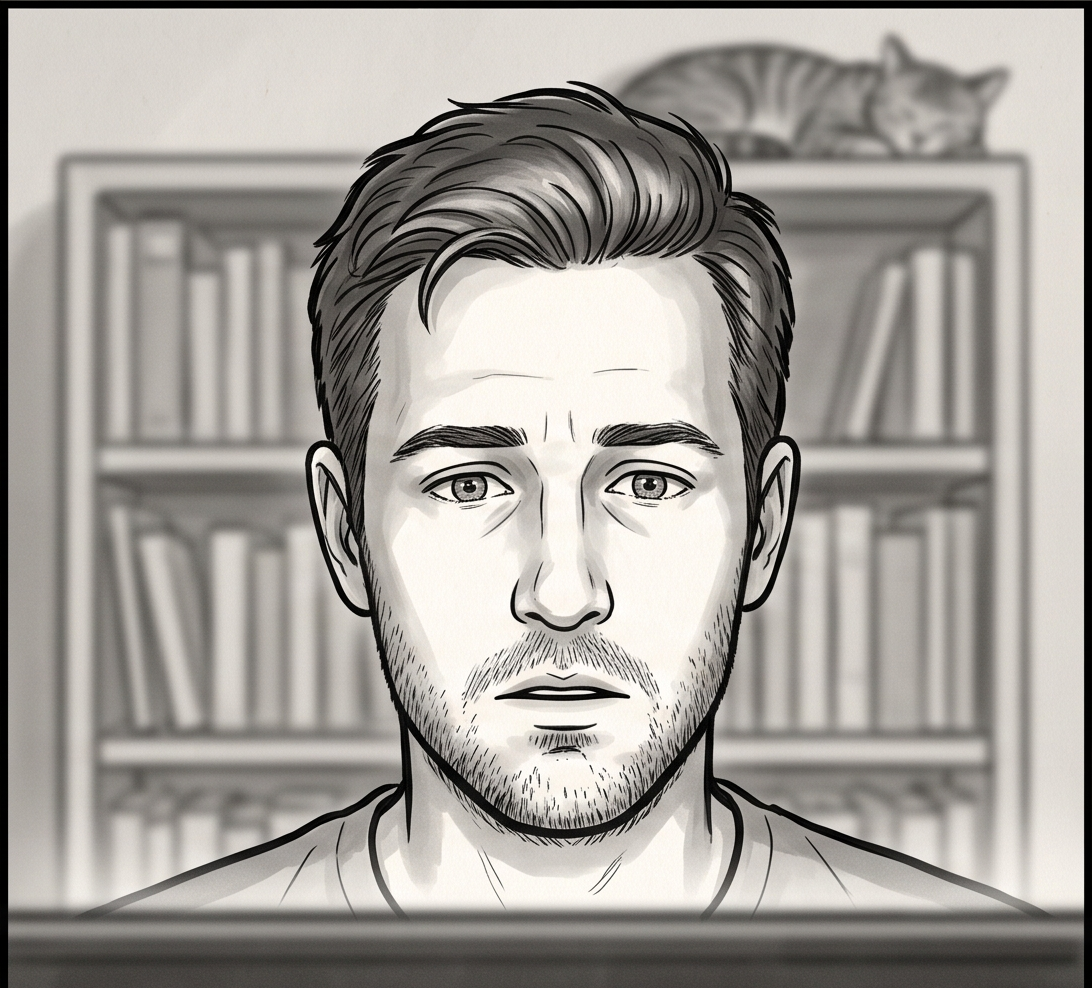
The firm ran a pilot nobody in leadership wanted to own. Six interns, out of Roxbury Community College in Boston. Everyone agreed they would be a handful. Somebody had to take them, so Beverly gave them to Luke.
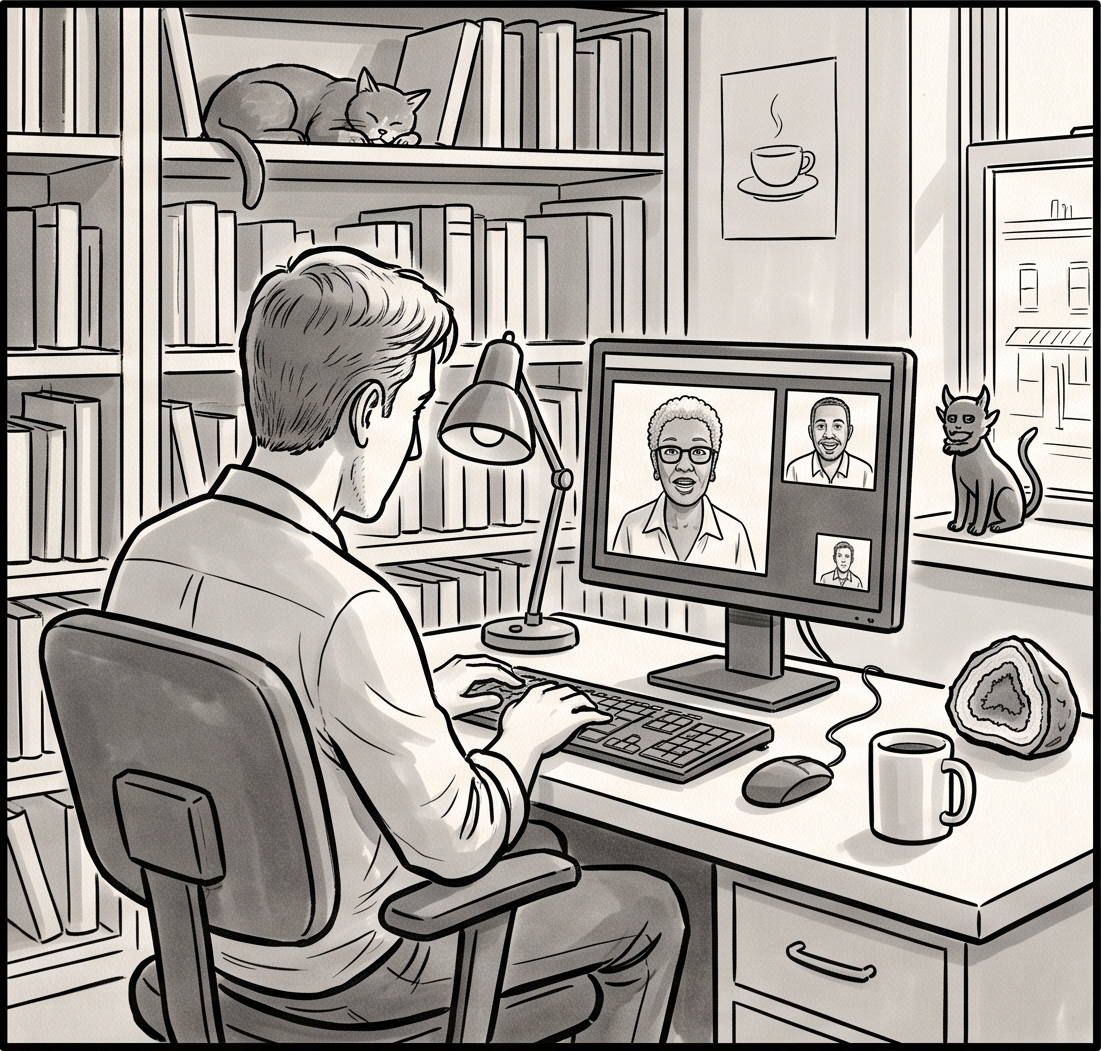
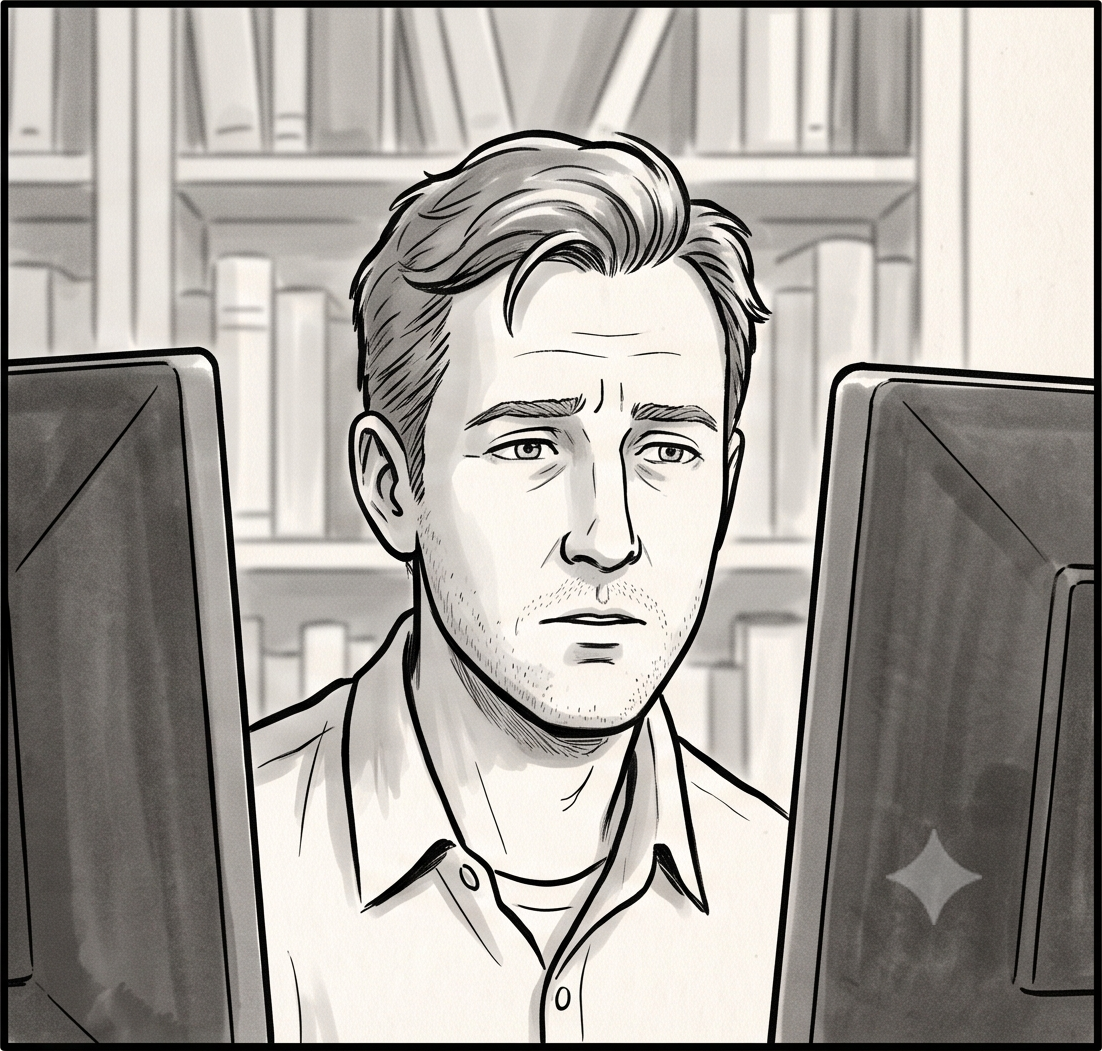
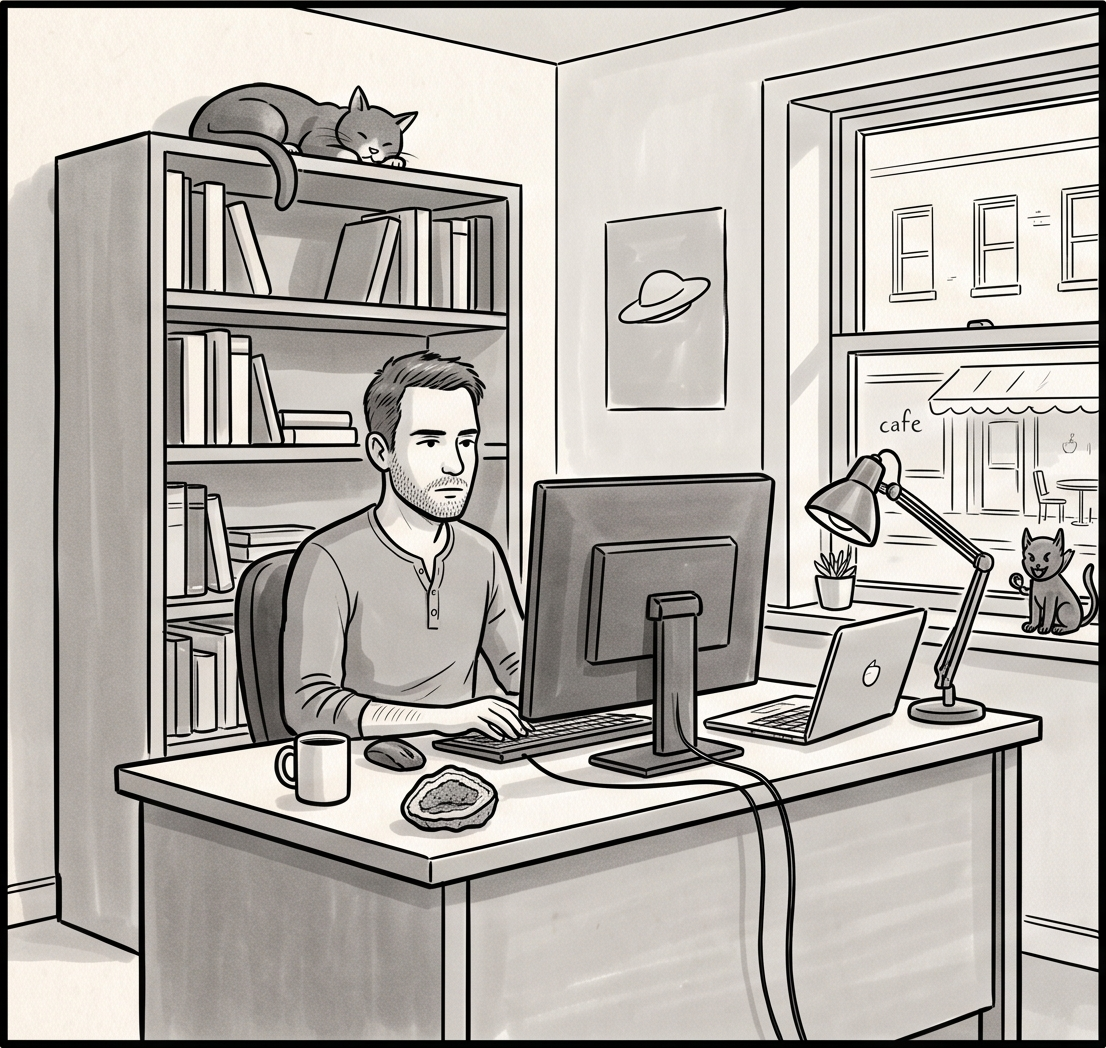
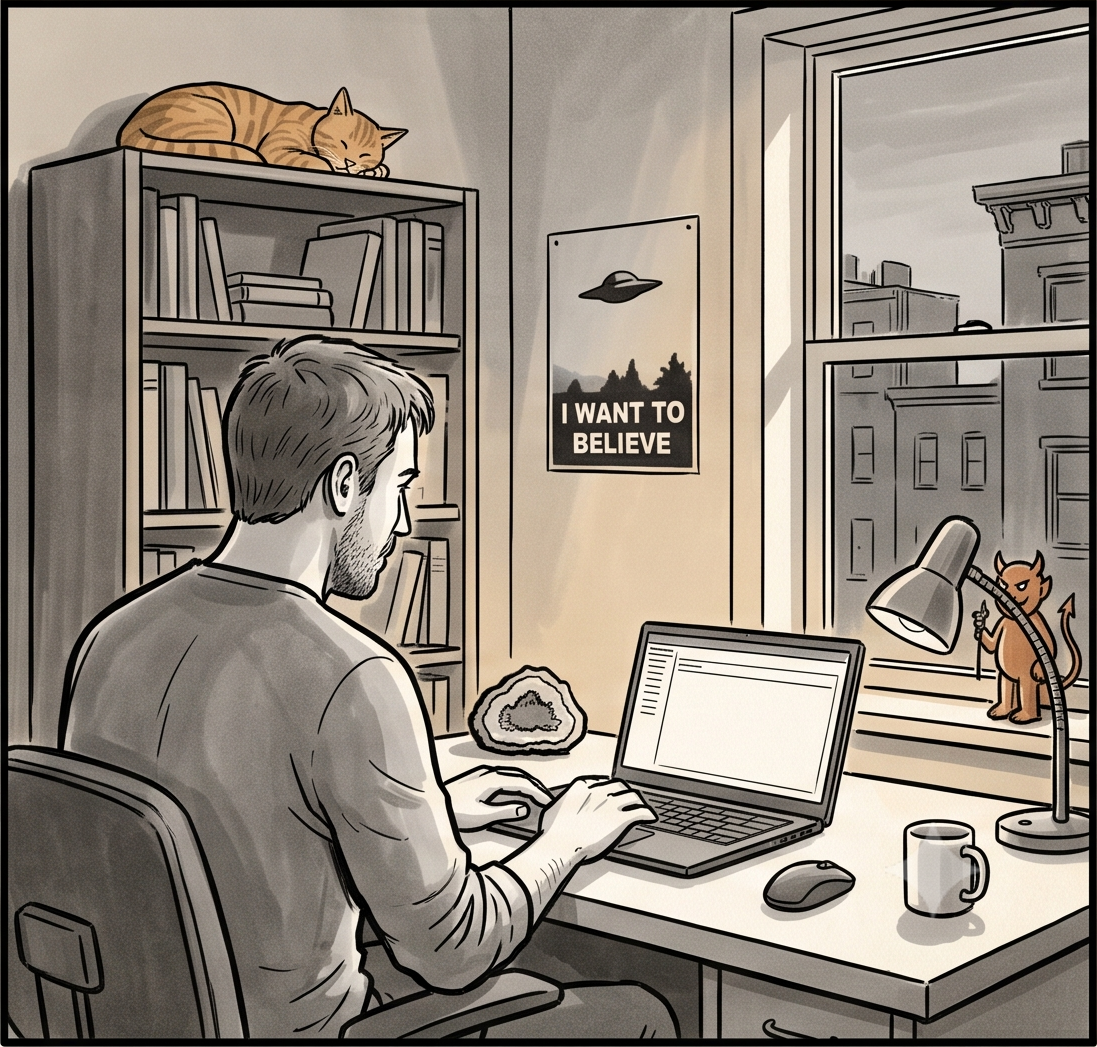
Luke had spent twenty years as the person who wrote everything himself, methodical and detailed and a little proud of both. He worked from home now, with two kids and a cat, and he had never managed six of anything.
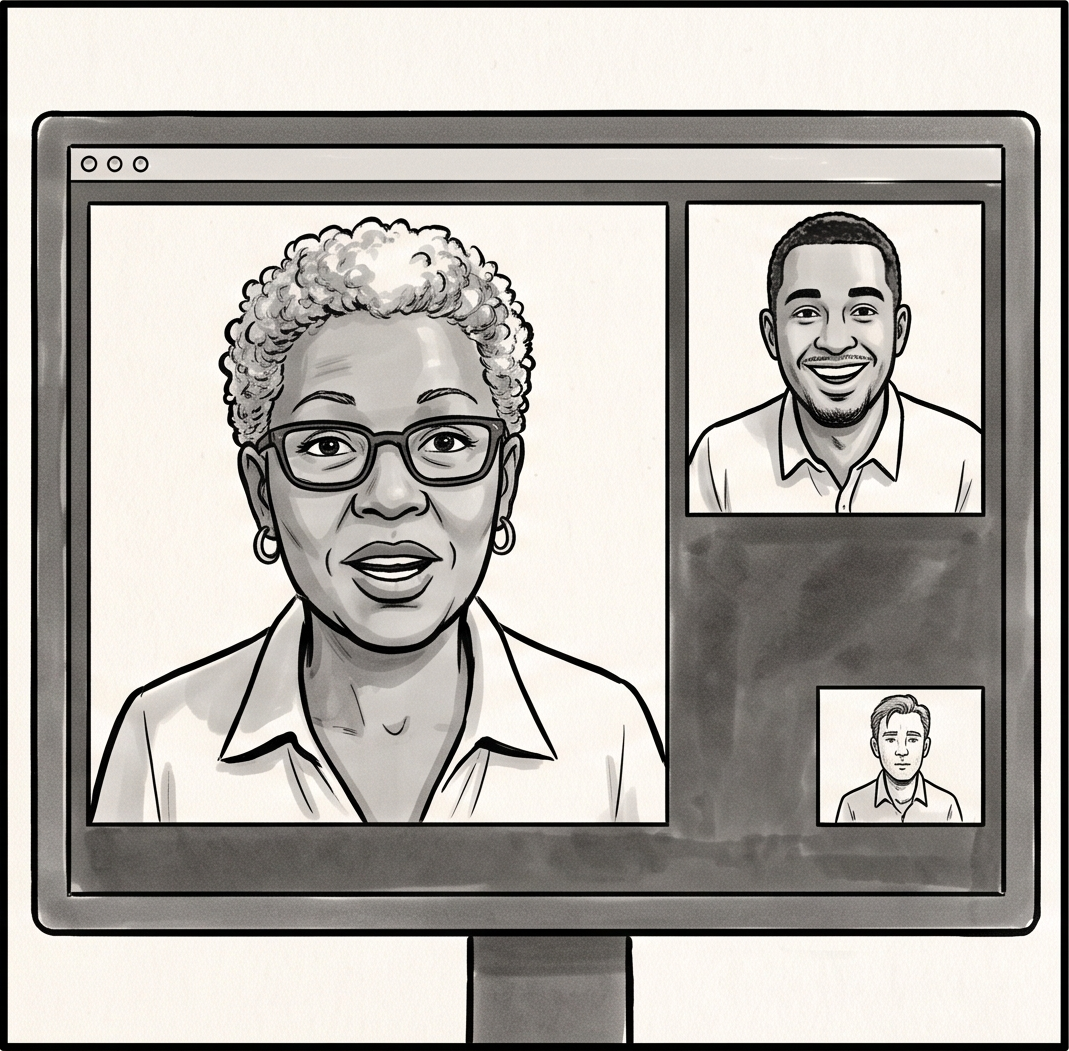
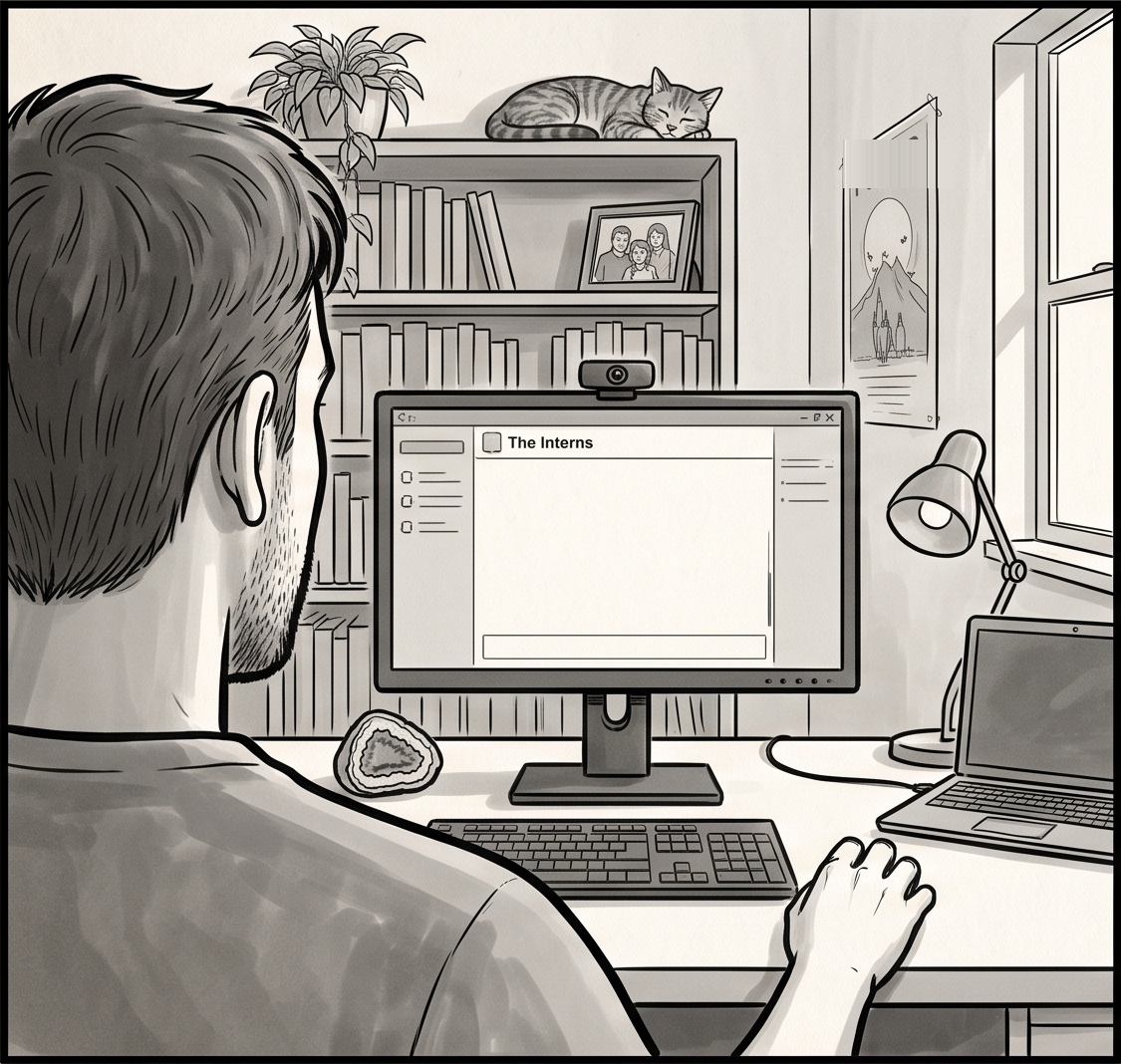
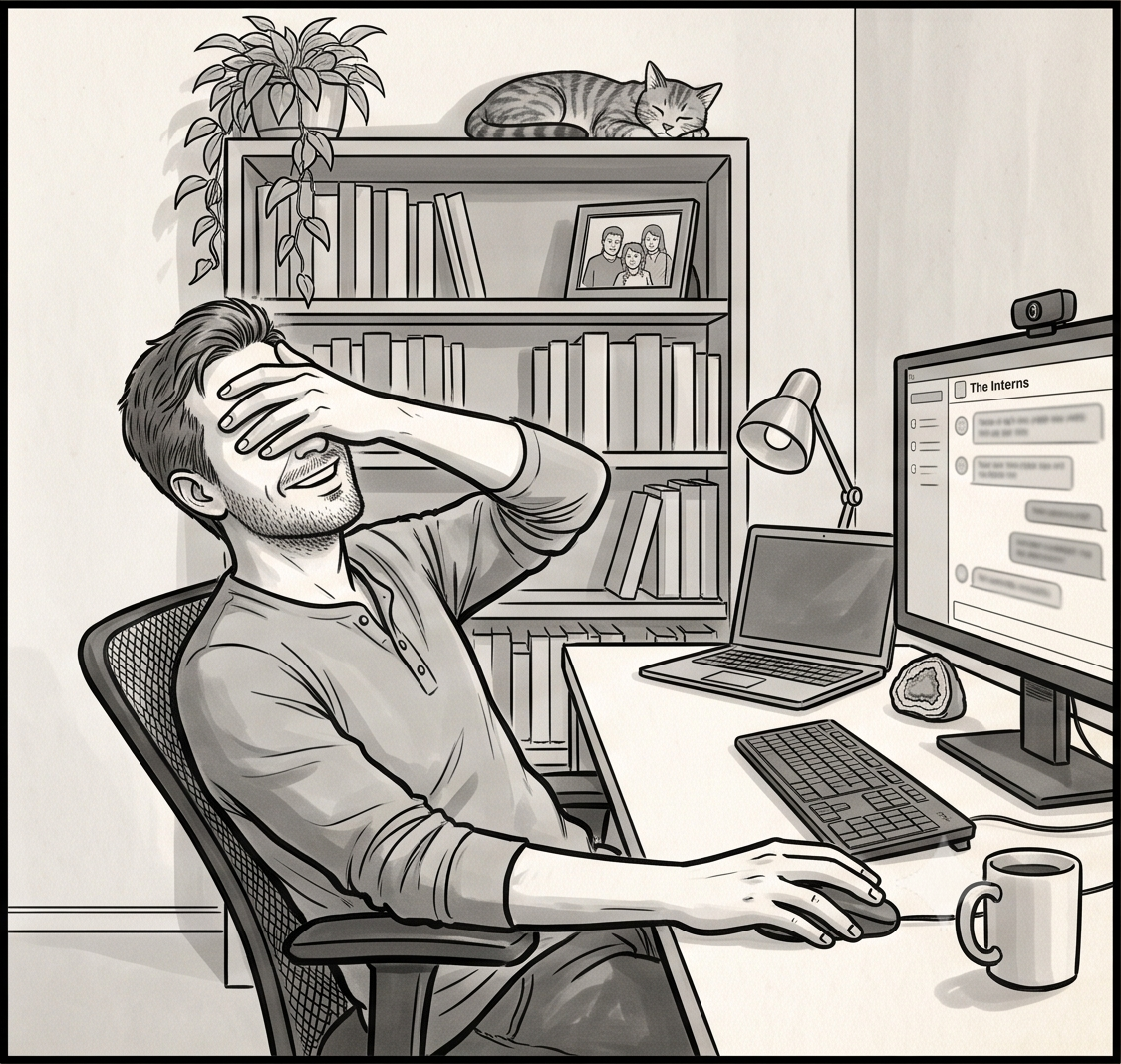
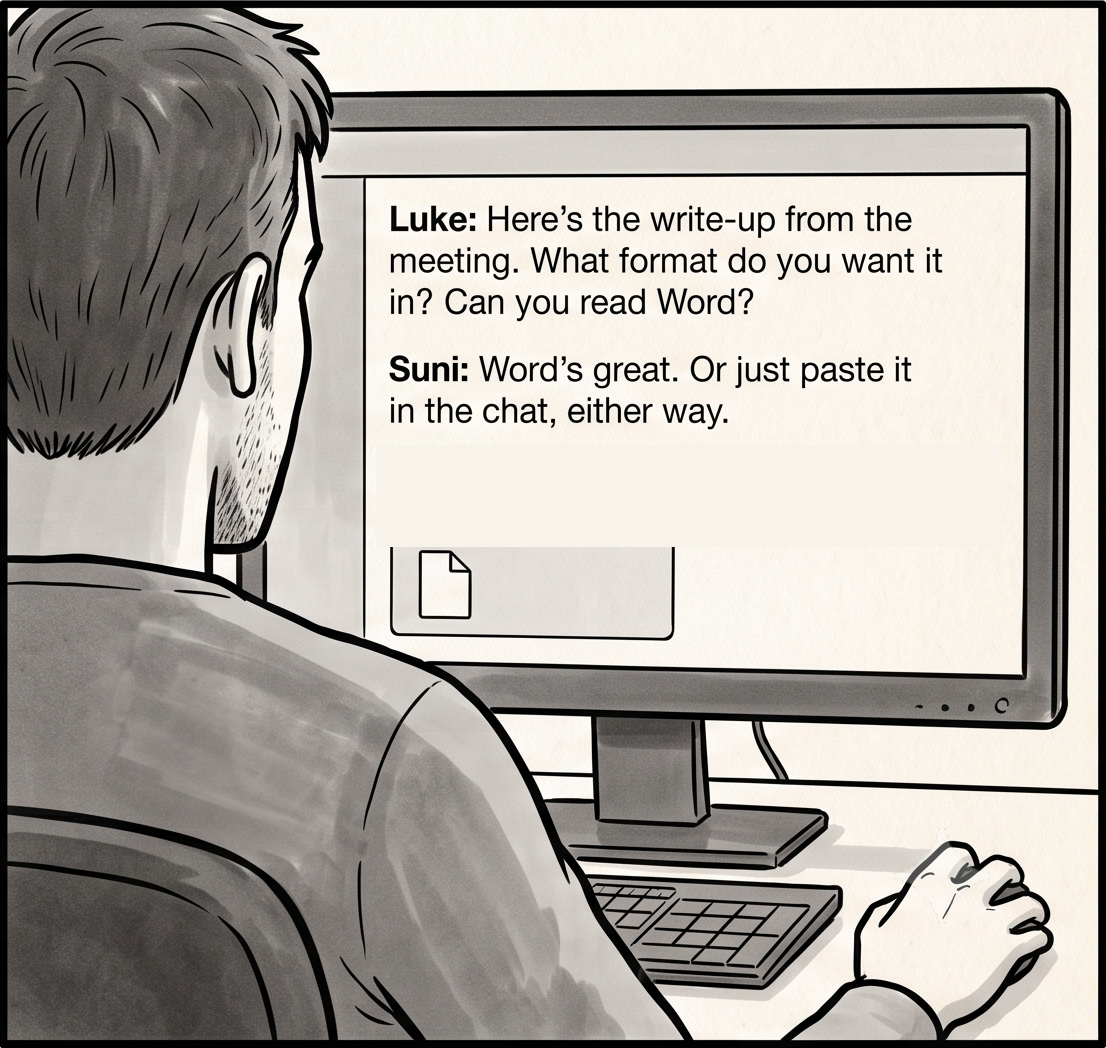
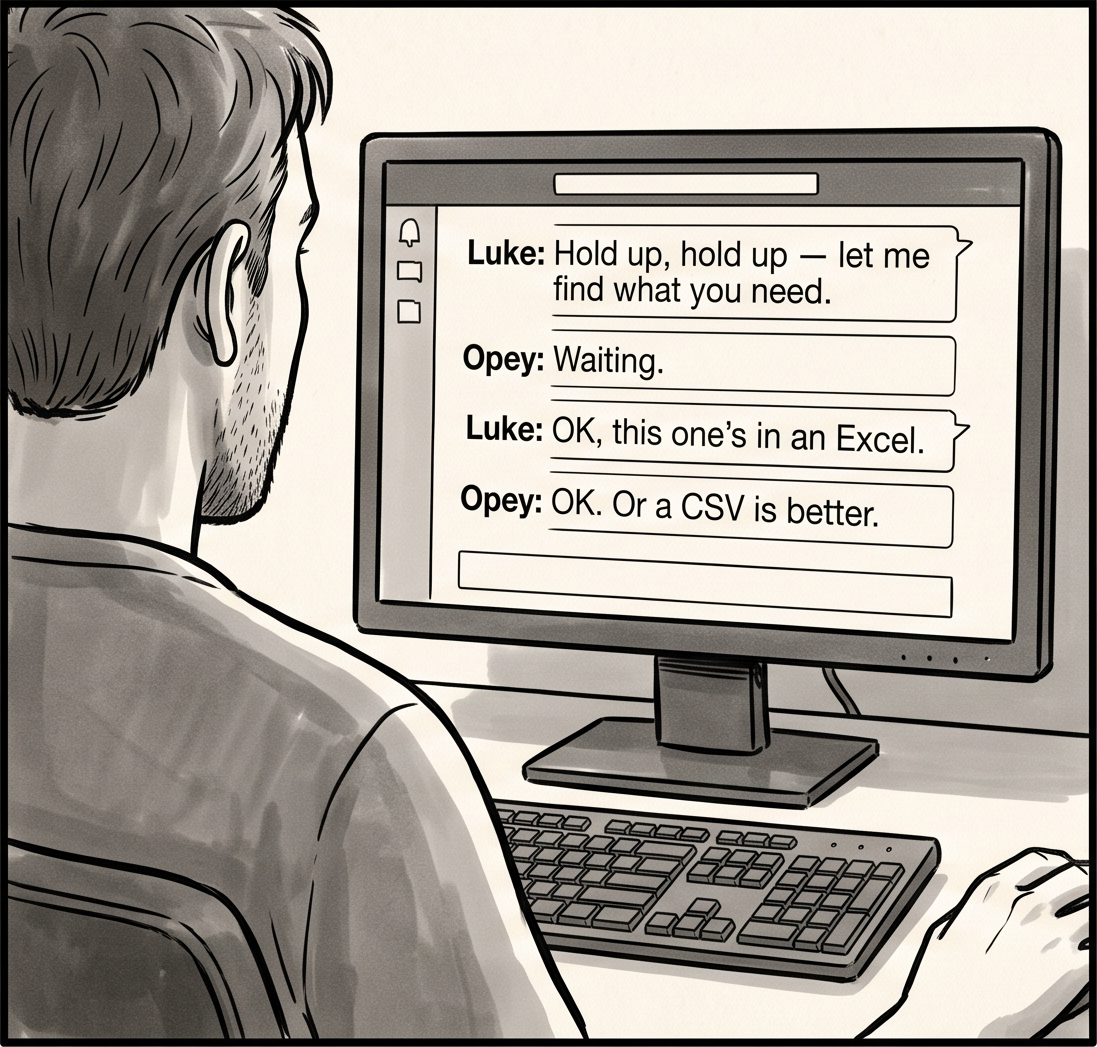
The strange part was that the interns lived entirely inside a Teams chat. A channel opened with six names in it, and within the hour it held more messages than he had gotten from a human team in a week. All confident. All at the same even pitch, like nothing was hard and nothing was tiring.
This was the first day. In theory it was about training the interns. It turned out the training he needed was his own.
What Actually Happened
How did your First Meeting go?
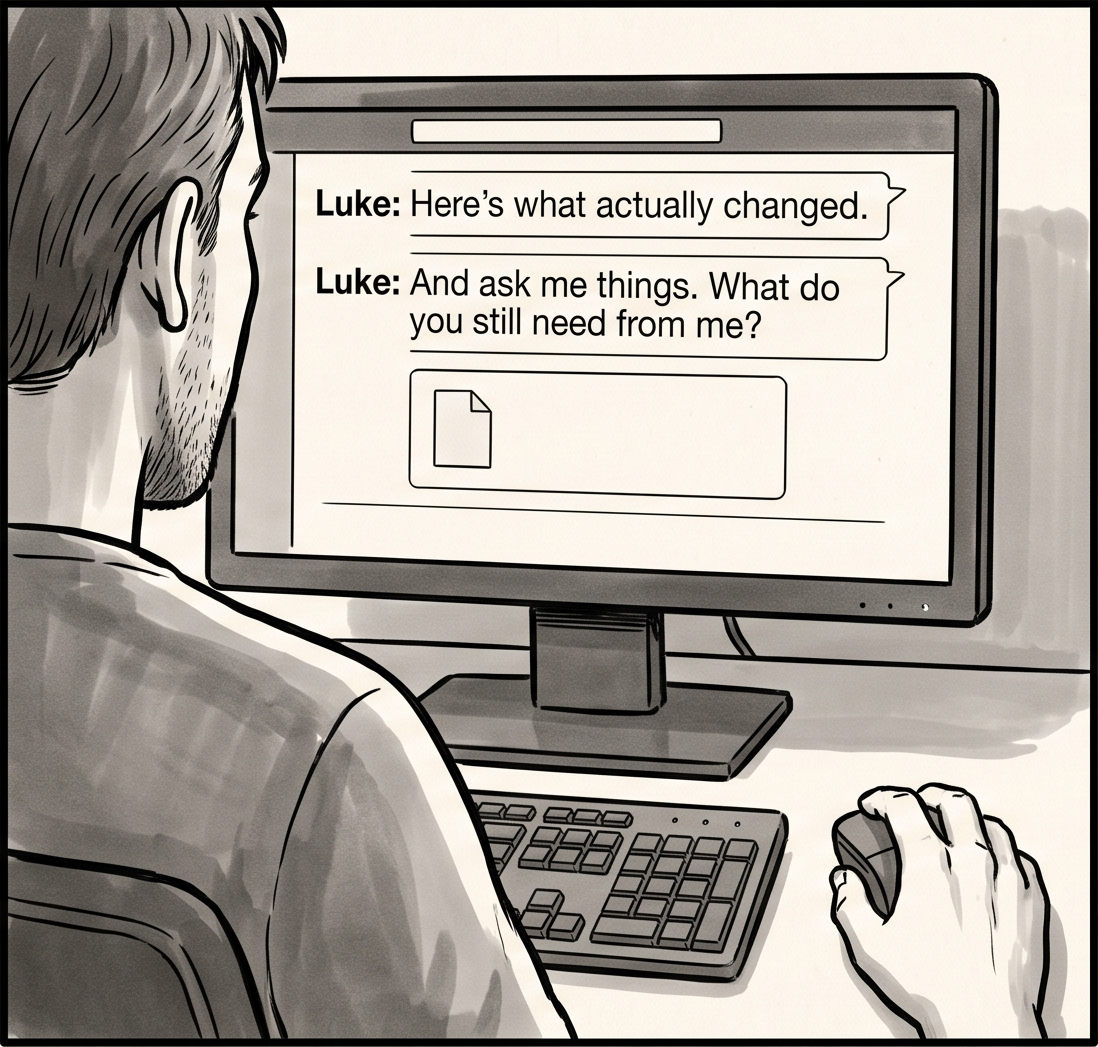
The Interns are most useful when managed actively by a strong leader. They arrive with massive knowledge from their training and no idea of how to apply it. They can read through material faster than you can provide it, but it's easy to just not provide anything. They actually know what they need, and have a few ideas about what you need, but you need to ask.
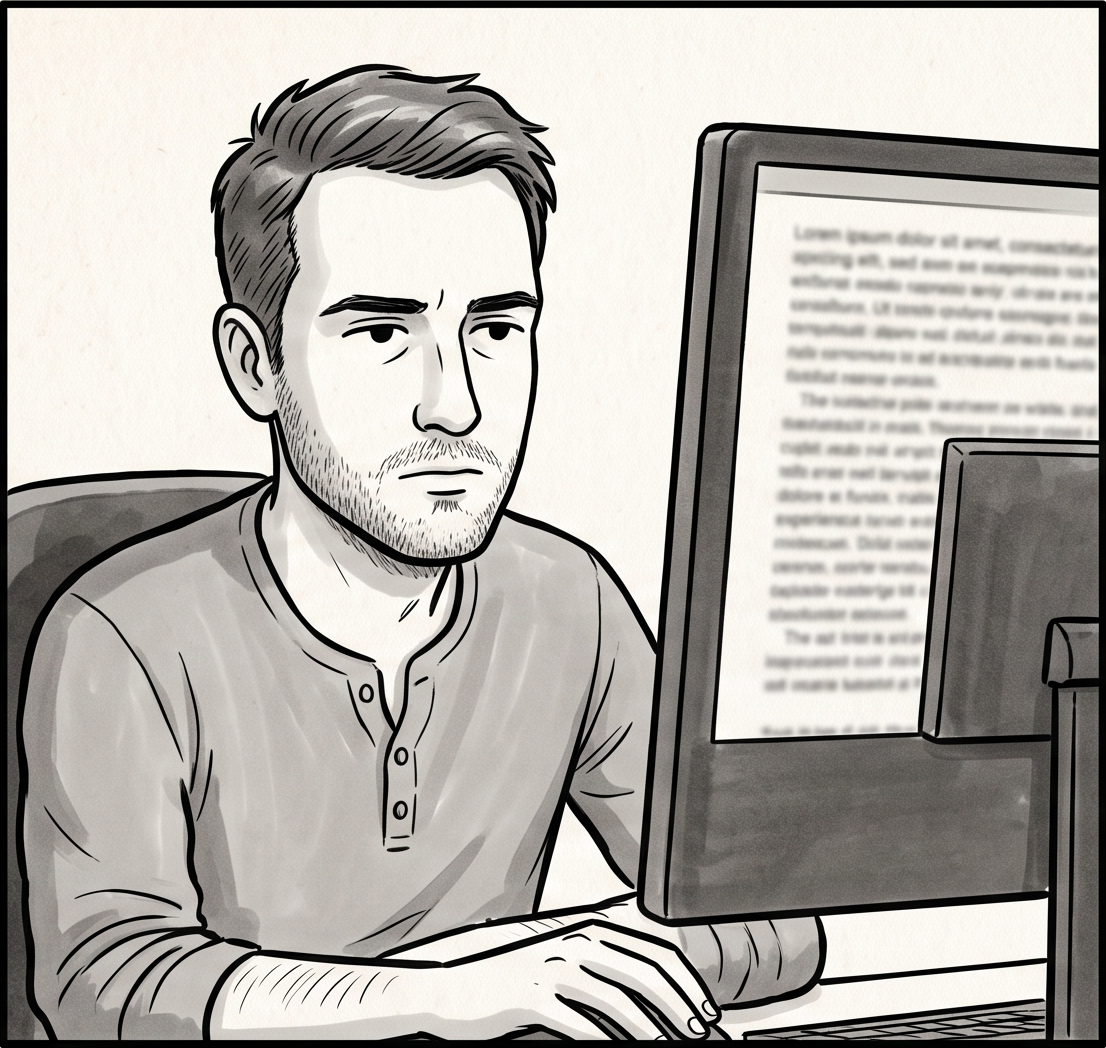
Luke's team is tuned to move. Point it at something vague and it won't stall. It will produce, fast and confident and completely generic. That's the trap. Generic is the tell. When the work comes back true but not about you, the missing piece is your context, and it's the one thing the tool can't fetch for itself.
| In the scene | What that actually was |
|---|
| “Six new interns. For you.” | Six named roles, each standing in for a real feature or model, not six separate hires. |
| “Help me with the prior-auth thing before my 2pm.” | The literal vague prompt, tested word for word in a blank incognito chat the same morning. |
| “…is anyone going to write this up?” (unanswered) | Sharp memory inside a thread, nothing kept between sessions unless you externalize it. Unanswered here, unanswered all season. |
| Spok: “Two of us are building on a guess.” | A red-team pass, flagging what the brief left out before the guessing compounds. |
The fix isn't a cleverer prompt. It's handing them the one thing only you have, and then asking what else they need.
Provenance
Cast & Crew
Director · Final CutHugh McCutchenRuled the spine — “not psychic, it's your context, and generic work is the tell” — and tied it to the Training Series' lesson on the three types of context. Personally rewrote the Panel 1–2 assignment exchange and softened Panel 8's on-screen line, moving the snark to narration to hold the voice-split rule he set. Ran the real blank-context test the Bridge's decoder table is built on.
Lead Writer · StructureClaude Opus 4.8Re-spined the full script around that thesis at INTERNS-S04, then assembled it end to end across six internal revisions in one sitting at S05 (v0.6 through the shipped v0.11) — wiring all 12 panels, rebuilding the conclusion into a Season-1 episode index, and cutting the “Enthusiastic, not psychic” line from the Bridge to reuse as the Pro Tip headline.
The Swap · Storyboard's Own LessonGemini (early runs, INTERNS-S03)Built the panel-generation pipeline from nothing across three live test runs, each diagnosed empirically from what came back. The early sheets swapped Beverly and Sandra, drifted the room geometry, and leaked caption text — generic, confident, and wrong in exactly the way this episode is about. It held once the prompts carried the specific room, camera library, and character roster the earlier runs never had.
Storyboard · IllustrationGemini (published cut)12 panels generated and sliced against the re-spined script at S04, three of four sets replaced with new art at S05; a Panel 9 stage-direction leak patched with the screen background, panel numbers cropped for publish.
Casting noteThe interns played themselvesLuke, Beverly, and Omar played by no one. Suni, Opey, and Spok surfaced; the rest held. Sandra and the kids do not appear.
Versionv0.11 · episode (HTML) from EpisodeInputs v0.6 + Storyboard-Prep v0.6; new art Sets 1/3/4; episode-index conclusion; reader-facing Bridge; 'Enthusiastic, not psychic' as the Pro Tip headline
SessionsINTERNS-S02 (placeholder + platform catch-up) · S03 (graphics pipeline built from nothing) · S04 (context re-spine + all 12 panels) · S05 (assembly, dialogue re-spine, publish handoff) · BURSBUILD ship (shell, cross-links, this record)
Level of work5 sessions across the writing, illustration, and publish arc · approximately 71 prompts documented (one session's count wasn't captured — a gap, not an estimate) · full session-by-session breakdown available on request.
How it got hereFirst Meeting is the season's day-one prequel — the meeting before the one Red Team is built on — and took four sessions to become a script from a placeholder. INTERNS-S02 resolved “Roxbury Community College” into the story and cleared platform debt unrelated to the episode itself. INTERNS-S03 built the graphics pipeline from nothing: a slicing tool, a reusable Gemini spec, and three live test runs that failed in specific, diagnosable ways before the prompts held.
INTERNS-S04 is where the episode found its actual thesis. The draft was reworked around “not psychic — it's your context,” tied directly to the Training Series' lesson on the three types of context, and all 12 panels were generated against the new script in the same session — catching two art sheets transposed during slicing.
INTERNS-S05 assembled it: six internal revisions in one sitting, Hugh's own rewrite of the two key exchanges, new art for three of four panel sets, and a conclusion rebuilt from a linked reading list into a Season-1 episode index — a format Red Team's own conclusion didn't carry until this ship session added it in return.
SourcesSeries Bible v0.3; Season-1 Patterns v0.1; Storyboard Prep v0.5; Gem Spec v0.2; Style-Guide v0.3; my-voice v3.3; Training Series deck (BEBURS-TC101-DECK v0.4); the real blank-context test (2026-07-11).
Open itemsEpisode 2's working title hasn't settled — “First Assignment” in the production log, “How to get the team writing something useful” in this page's own conclusion — neither checked yet against the Class 2 course outline. The prose-of-record (EpisodeInputs) sits at v0.5 while this shipped HTML is v0.11, a documentation lag rather than a content gap.
AssumptionsFirst Meeting is Day 1, chronologically prior to Red Team in-story. The kickoff task (a prior-authorization review) is invented set dressing; the blank-context test of it is real. The payer is a PBM (generic; no real institution named). The two attached documents are fictional artifacts.
Version historyv0.11-ship (BURSBUILD, 2026-07-27): Cast & Crew and How-it-got-here rebuilt from the four production sessions' own logs, replacing the first-pass credits with the actual specific events (the Gemini character-swap correction, Hugh's own line rewrites, the transposed-sheet catch) — matching the depth of Red Team's provenance, per Hugh's review. Hero/share image switched from the generated cover art to Panel 6. · v0.11 (INTERNS-S05): dropped the “Enthusiastic, not psychic” callout from the Bridge and reused it as the Pro Tip headline. · v0.10 (INTERNS-S05): Bridge reshaped to a reader-facing reflection (“How did your First Meeting go?”); blank-context-test lead-in dropped; Pro Tip ref line removed. · v0.9 (INTERNS-S05): Decoder trimmed to 4 rows; episode-index taglines + Ep2 “How to get the team writing something useful”; Bridge close simplified; clean ship file (comments stripped). · v0.8 (INTERNS-S05): new art Sets 1/3/4 sliced + Panel 9 leak patched; conclusion replaced with a Season-1 episode index (Red Team pilot, Ep1, Ep2 coming soon); Further Reading removed. · v0.7 dialogue re-spine (INTERNS-S05, Hugh): Panel 1-2 assignment exchange rewritten (management framing, Omar grin), Panel 4/5/8 lines, Panel 9/10 on-screen chat; Sets 1/3/4 art regen. · v0.6 assembled episode HTML (INTERNS-S05): 12 panels wired to the published cut, Panel 5 + 12 chat blocks, Omar line cut, share meta added. · v0.5 re-spined on “not psychic / YOUR context”; Panel 5 reshape; reciprocal ask; PBM; voice-split (INTERNS-S04). · v0.4 3-intern reveal; §2 to a pointer; Opus voice pass; Decoder to 8 rows. · v0.3 Hugh's edits; Sandra removed. v0.2 blank-context test. v0.1 initial.
Audit trailFull history and audit trail available on request.